


Your AI Policy Can’t Enforce Itself
Security has always known the difference between policy and control. Nobody claims they have a firewall just because they have a…
Read More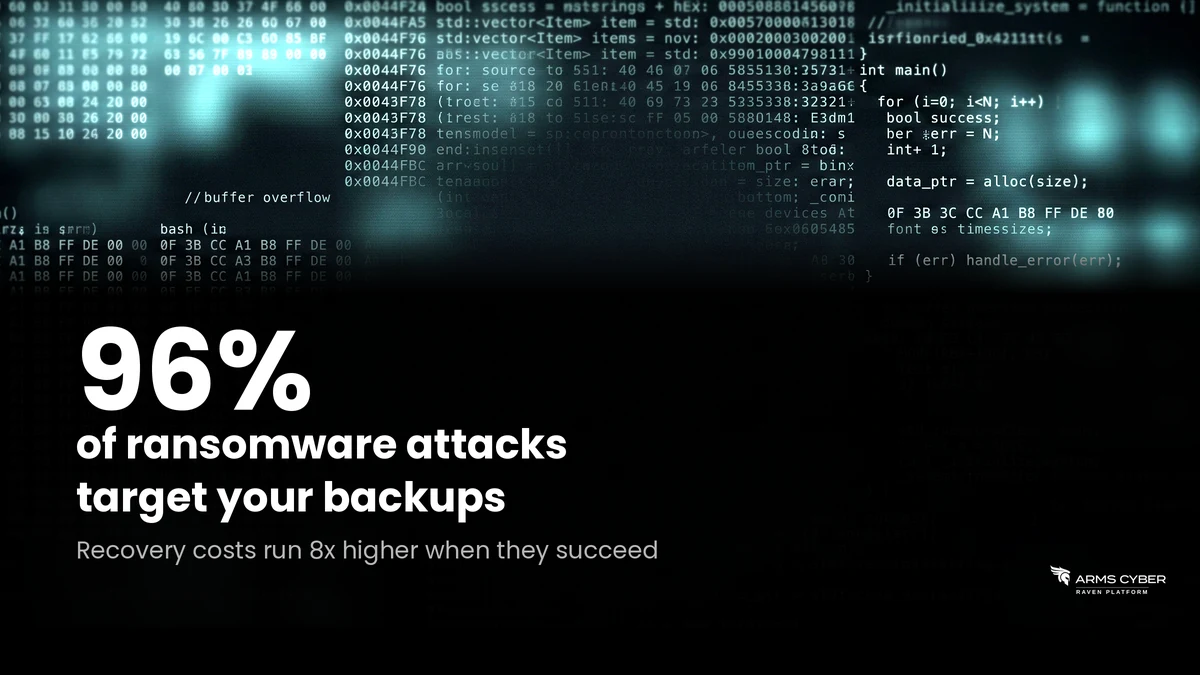
For a long time, backups were the answer to ransomware. Encrypt our production data? Fine, we’ll wipe, restore, and move on. Your backup was the card you kept in your back pocket, the reason you could refuse to pay.
Attackers know that card exists. So they stopped ignoring it and started attacking it first.
As we know, modern ransomware doesn’t lead with your production data. It leads with your ability to recover because as long as you can restore, the extortion doesn’t work. The fastest way to guarantee a payout is to take recovery off the table before anyone notices. So before the visible damage begins, the quiet work happens in your backup environment: finding the repositories, testing access, and neutralizing the one thing that would let you say no.
The data backs this up. In 96% of ransomware attacks, backups are targeted. When attackers succeed in compromising them, the median recovery cost runs roughly eight times higher, millions instead of hundreds of thousands. And they have time: the typical dwell period before encryption is four to five days, more than enough to map and disarm your recovery.
Here’s what makes this dangerous, most organizations hit this way were not careless. They had EDR. They had a mature security program. But endpoint defense watches the endpoint; it isn’t built to protect the recovery layer sitting in your backup infrastructure, and the two live in different blast radii. You can win the fight on the endpoint and still lose the war in the repository.
Immutability, the usual answer, has its own gap, one worth a separate conversation, because by the time an attacker reaches your backups, they often hold the valid credentials that immutability quietly trusts. (More to come on this in a few weeks.)
The reframe is simple: your backup isn’t a passive insurance policy anymore. It’s an active target, and it deserves active protection. That means treating the recovery layer as something an intelligent adversary is hunting right now and making sure that when they get there, there’s nothing to find, nothing they can use, and nothing they can destroy.
That’s the premise behind Arms Cyber AI Data Resilience (ADR): preemptive protection for the backups ransomware goes after first, so a clean copy always survives and you recover in minutes, not weeks.
The safety net still works. You just have to protect it before the fall.
Ashley Baich is the Director of Product Marketing at Arms Cyber, where she leads product positioning, messaging, and go-to-market for the company’s preemptive security & anti-ransomware portfolio. Arms Cyber’s patented Stealth Posture Management platform protects organizations across Windows, Linux, and MacOS by making critical data invisible and resilient to attackers.
Security has always known the difference between policy and control. Nobody claims they have a firewall just because they have a…
Read More
In November 2025, Anthropic published something that should have gotten more attention than it did. The report documented what the…
Read More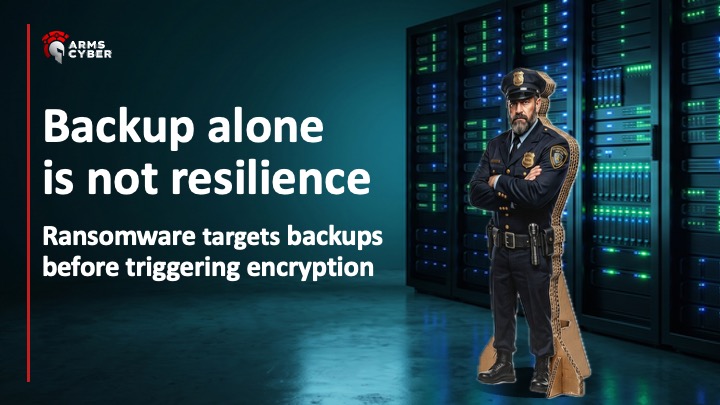
For most of the last decade, the security industry treated backups as the final word in ransomware defense. The logic was clean and…
Read More