Conceal
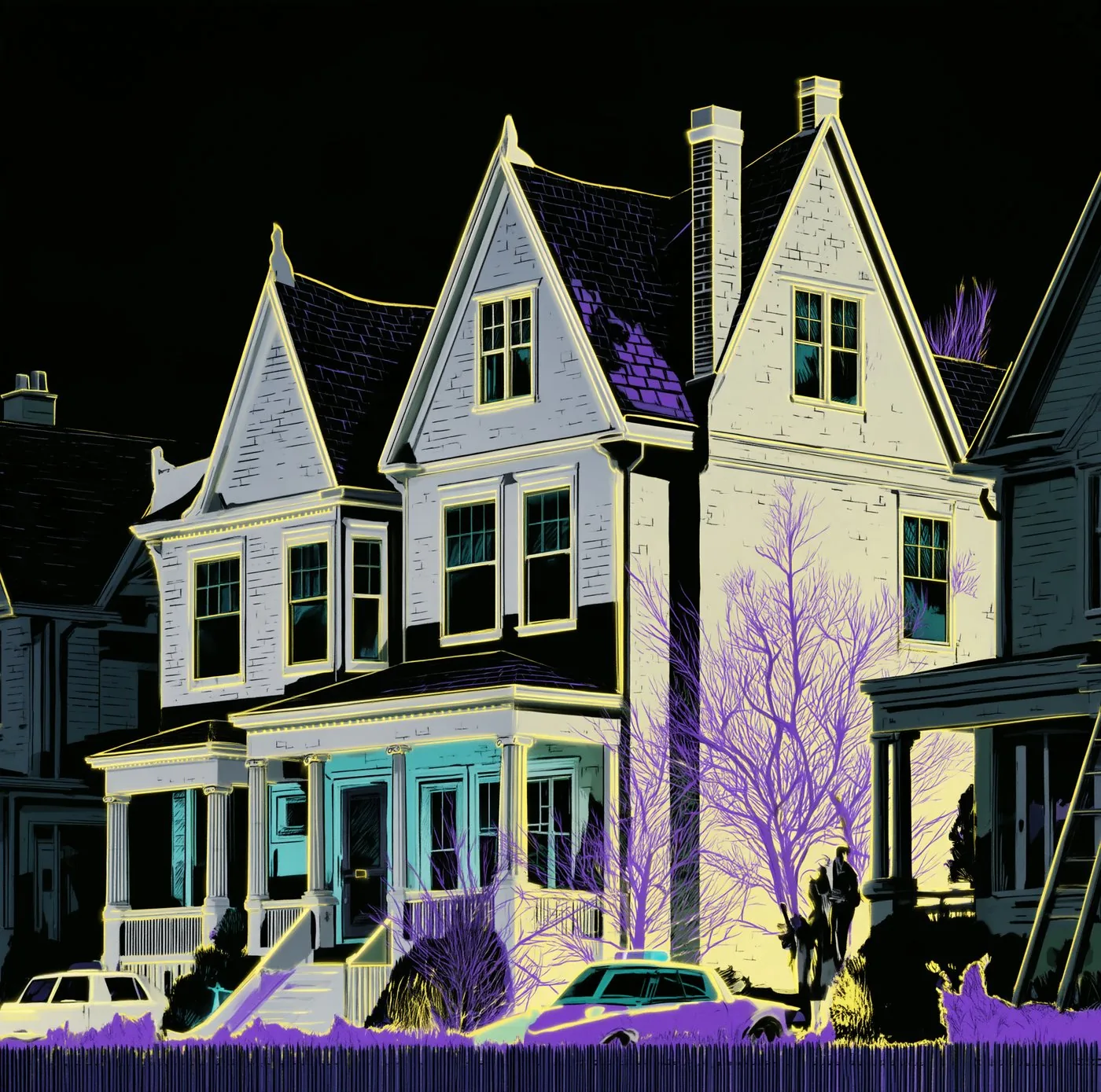
Stealth directories keep critical data out of reach, invisible to encryption and exfiltration.
AI-era attacks don’t announce themselves, rather, they act with legitimate permissions, at machine speed, in code that rewrites itself as it runs. You can’t detect what was never built to be seen. Arms Cyber takes the target off the board.
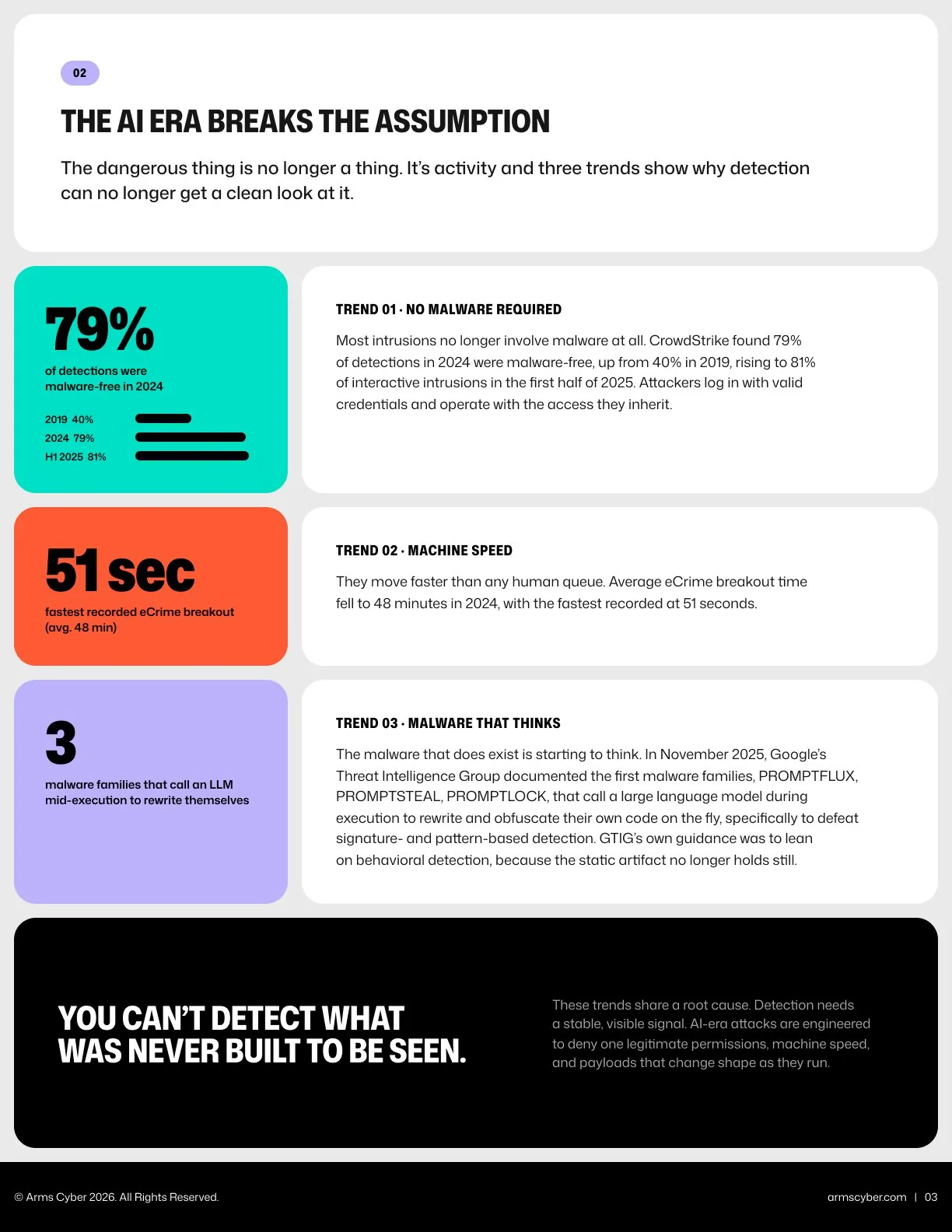
of intrusions now involve no malware at all
(CrowdStrike, 2025)
average attacker breakout time; fastest 51 seconds
(CrowdStrike, 2025)
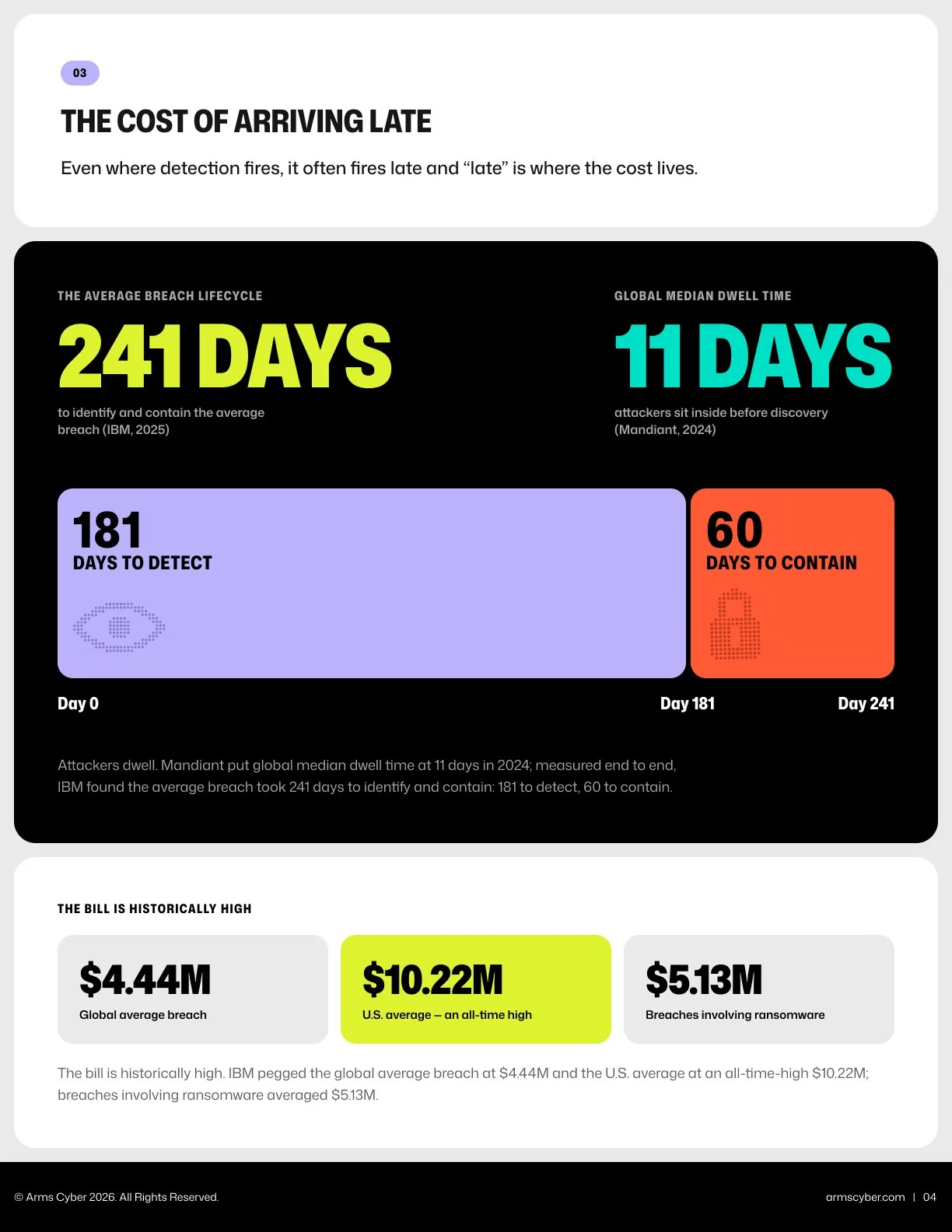
to identify and contain the average breach
(IBM, 2025)
Every control in the category is racing to intervene earlier: faster blocks, sharper verdicts, mid-flow interception. There’s an earlier move no one can out-tune: give the attacker nothing to aim at. Data that can’t be found can’t be encrypted, exfiltrated, or leaked.
SACR’s ECP framework puts the highest-stakes risk in Zone 5: data-centric enforcement. But Zone 5 is converging on visibility: classify, trace, coach.
Watching data move isn’t the same as protecting it.
Stealth directories keep critical data out of reach, invisible to encryption and exfiltration.
Decoys expose the attacker, not your data; Arms Cyber acts on the real files during execution.
Stealth backups in concealed enclaves mean clean recovery in minutes.
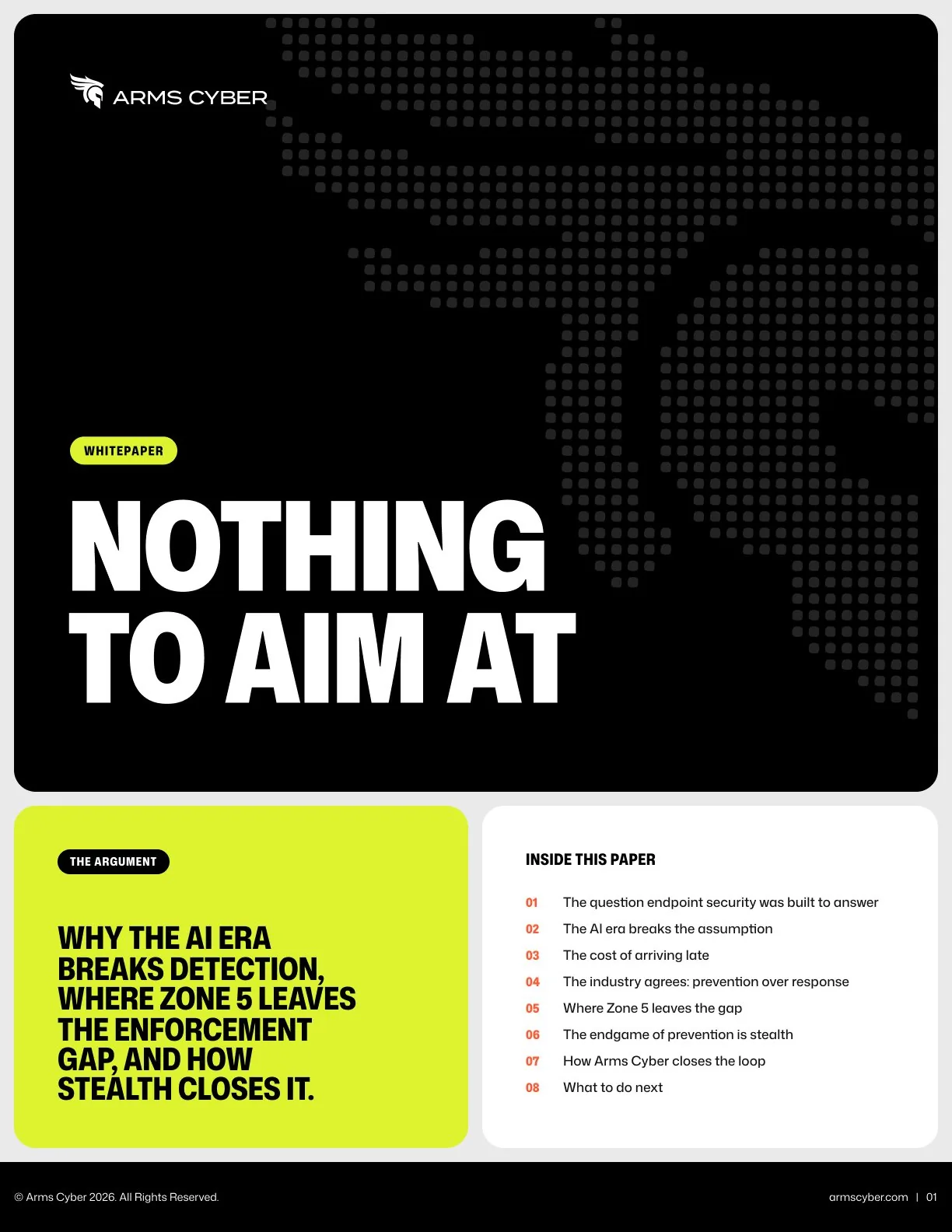
Why the AI era breaks detection, where Zone 5 leaves the enforcement gap, and how stealth closes it.